Key Takeaways
- Present bias is your brain overvaluing immediate rewards and steeply discounting the future, which is why saving and investing feel so hard.
- Every money decision is a war between present-you and future-you — and present-you almost always wins, because it’s the one who’s actually here.
- Your brain treats your future self like a stranger, which is why robbing them to fund today never feels like theft.
- The discount is steepest right now. You’ll happily wait between two distant dates, but demand the reward immediately when “now” is an option.
- Willpower loses this fight because it’s structurally unfair — present-you has every advantage.
- You beat it by making the future vivid, automating the decision, and pre-committing so present-you never gets to choose.
Here’s a choice. I can give you a good amount of money today, right now, in your hand — or noticeably more if you wait a year. Almost everyone grabs the smaller amount today. Now change one thing: I’ll give you that good amount in five years, or the larger amount in six years. Suddenly, almost everyone happily waits the extra year. Same one-year wait. Same trade-off. But when “now” was on the table, your brain lost its mind for it — and when both options were far away, your brain became perfectly patient. That single inconsistency is one of the most expensive glitches in the human mind, and it’s quietly running your entire financial life.
It’s called present bias, and it is the deep reason saving feels like punishment, investing feels impossible to start, and “I’ll begin next month” never actually arrives. Your brain is wired to grab what’s in front of it and heavily discount anything in the future — and the further away a reward is, the more your brain shrinks its value until it barely registers at all. The result: present-you keeps winning, and future-you keeps paying the bill.
So let’s understand this enemy properly — why your brain does it, why willpower can’t beat it, and the system that finally lets future-you stop getting robbed.
What Present Bias Actually Is
Present bias is the well-documented tendency to overvalue immediate rewards relative to future ones — to prefer a smaller payoff now over a larger payoff later, even when waiting is clearly the better deal. Behavioral economists describe it through a pattern called hyperbolic discounting: the value your brain assigns to a reward drops sharply the further into the future it sits, and it drops most steeply right at the boundary between “now” and “not now.”
In plain terms, your brain has a broken exchange rate for time, a steep time preference for the present. A dollar of pleasure today feels enormous; the same dollar of pleasure in twenty years feels like almost nothing — not because it is worth less, but because your brain irrationally discounts it. This is the exact opposite of how money actually works, where a dollar invested today is worth more in the future thanks to the time value of money. Your brain values the future backwards: it shrinks future rewards precisely when compounding is busy growing them. That collision — your psychology pulling one way while the math pulls the other — is where present bias does its damage.
“Your brain runs a broken exchange rate for time: it overprices today and gives the future away for free — at the exact moment compounding is trying to make the future priceless.”
The War Between Present-You and Future-You
The clearest way to understand present bias is to stop thinking of yourself as one person making money decisions, and start seeing two. There’s present-you — the one who exists right now, who feels the craving, who wants the thing, who is tired and tempted and here. And there’s future-you — the one who will live with the consequences, who needs the savings, who will either thank you or curse you decades from now. Every single financial decision is a negotiation between these two, and they want opposite things.
Present-you wants to spend, enjoy, and have it now. Future-you wants present-you to save, invest, and wait. And here’s the cruel structural problem: present-you has every advantage in this fight. Present-you is in the room. Present-you feels the desire viscerally, in the body, right now. Future-you is an abstraction — a vague, faceless idea who isn’t here to argue their case. So present-you wins almost every time, not because the decision is wise, but because present-you is the only one of the two who actually shows up to the table. Future-you gets robbed in absentia, again and again, by someone who was simply present enough to grab the money first.

Why Your Brain Treats Your Future Self Like a Stranger

Here’s the finding that explains everything. Research in psychology has suggested that when people imagine their distant future self, the brain activity often looks less like thinking about themselves and more like thinking about another person entirely — a stranger. Your future self, the one who will be old and need the money you’re spending today, doesn’t fully register to your brain as you. They register as someone else.
And that changes everything, because it reframes what saving actually feels like to your brain. When you save or invest, your brain experiences it as taking money away from present-you — who is real and here — and handing it to some stranger you’ll never meet. No wonder it feels like a loss. No wonder it requires willpower. You’re being asked to sacrifice for a person your brain doesn’t quite believe is you. Conversely, spending on present-you feels natural and right, because present-you is unmistakably, vividly real. The entire difficulty of building wealth comes down to this: you’re being asked to be generous to a stranger, using money your present self desperately wants to keep.
Once you see it this way, the solution starts to reveal itself. The problem isn’t that you lack discipline. The problem is that future-you is a faded ghost your brain doesn’t care about. Make that ghost real — vivid, concrete, undeniably you — and the entire equation shifts. Suddenly saving isn’t giving money to a stranger; it’s protecting yourself. We’ll get to exactly how to do that, but the principle is the heart of the whole fix.
This Is Exactly Why Compounding Feels Impossible
Present bias isn’t just abstract — it’s the specific reason the single most powerful wealth-building force on earth feels so unbearable to use. Compounding only rewards those who wait, and waiting is precisely what present bias makes excruciating. The payoff sits years in the future, in the hands of that faded stranger, while the cost — not spending today — is paid by vivid, present-you right now.
This is why so many people quit investing during the slow early years, the exact trap we mapped in why compounding feels slow at first. Present bias is the psychological engine of that quitting. Your brain, screaming for a reward it can feel now, simply cannot stay motivated by a payoff it has discounted down to near-zero. The flat early part of the compounding curve offers present-you nothing, and present-you is the one holding the controls. Beat present bias and you don’t just save more — you finally gain the ability to endure the wait that compounding demands. They are the same battle.
“Every $100 present-you spends instead of investing is roughly $760 quietly stolen from future-you thirty years on. The robbery never feels like one — because the victim is a stranger your brain refuses to recognize.”
Put a number on it and the theft becomes vivid: a single $100 that present-you spends today instead of investing at a steady 7% is roughly $760 taken from future-you three decades later — pure illustrative arithmetic, not a promise. Present bias hides that trade completely, because $100 of fun today is loud and real, while $760 for a stranger in thirty years is silent and abstract. Your brain isn’t doing the math. It’s just grabbing what’s in front of it.
What Nobody Tells You: Willpower Was Always Going to Lose
People treat their inability to save as a character flaw — proof they’re undisciplined, weak, bad with money. It isn’t. Trying to beat present bias with willpower is a structurally unfair fight you were always going to lose, and understanding why is what frees you to stop fighting it the wrong way.
Think about the matchup. On one side, present-you: vivid, here, feeling the craving in real time, armed with a brain that has discounted the future to almost nothing. On the other side, future-you: a faded stranger with no voice in the room. Willpower asks present-you to repeatedly choose the stranger over itself, in the moment, every single day, forever. Even if you win most of those moments, present bias only needs you to lose a few, and the savings leak away. You’re not failing because you’re weak. You’re failing because you brought willpower to a fight that willpower cannot win.
This is the same lesson that runs through this entire series: the durable solution is never “try harder,” it’s “change the structure so the fight doesn’t happen.” It’s why the automated approach in the reverse-budgeting system beats discipline, why removing money before you see it defeats Parkinson’s Law, and why so much of this fight is really about the deeper beliefs explored in money scripts. The same impulse also quietly powers lifestyle creep, where present-you upgrades today and leaves future-you the bill. Against present bias, the move is identical: take the decision away from present-you entirely, so the impulsive party never gets to vote.
And here’s the deeper truth the most successful people understand in their bones — a hard-won principle worth absorbing: the ones who win the long game are simply the ones who stopped letting present-you run the show. They don’t chase the applause of today or the dopamine of the next purchase. They’ve trained themselves to care more about where they’ll be in five or ten years than about what feels good this afternoon. They genuinely don’t mind being misunderstood or looking like they’re “missing out” now, because they’ve internalized that the future self is the one who matters, and they refuse to keep robbing them. That patience isn’t a personality trait they were born with. It’s a decision, made once and defended daily, to stop letting the present moment win every argument.
How to Beat Present Bias
You beat present bias not by becoming more disciplined, but by rigging the game so present-you can’t sabotage future-you. Here’s the system.
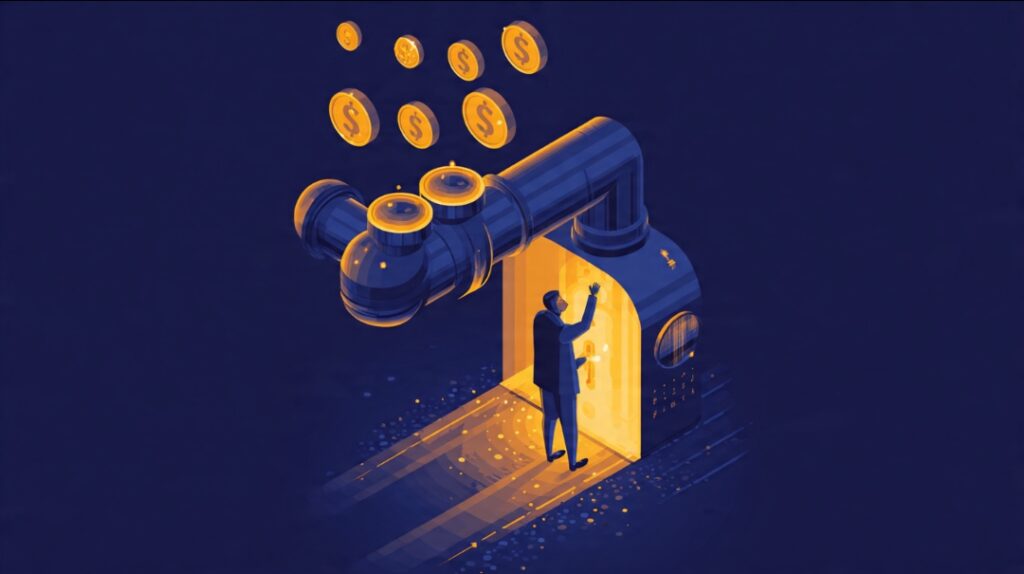
1. Make your future self vivid and real. Since the root problem is that future-you feels like a stranger, the master fix is to make them concrete. Picture your future self specifically and often — their life, their needs, what your choices today will mean for them. Name the goal in real, human terms, not abstract numbers. The more real future-you becomes, the less it feels like sacrificing for a stranger and the more it feels like protecting yourself. This single shift does more than any amount of forced willpower.
2. Automate the decision out of present-you’s hands. The most reliable defense: remove the choice entirely. When saving and investing happen automatically the moment income arrives — before present-you ever sees or feels the money — present-you never gets to decide. You’re not relying on winning the daily battle; you’re making sure the battle never reaches the battlefield. Automation is how future-you finally gets a permanent advocate in the room.
3. Use pre-commitment to bind your future hands. Make decisions in advance, when you’re calm and rational, that constrain your future impulsive self. Lock money where it’s awkward to reach. Commit publicly. Set the rule before the temptation arrives. Pre-commitment works because the version of you making the plan is the wise one, and you’re using their judgment to overrule the impulsive one before it ever shows up.
4. Add friction to instant gratification. Present bias thrives on frictionless, immediate access. Every barrier you put between an impulse and its satisfaction buys time for the rational self to catch up. Remove one-click buying, impose a waiting period on impulse purchases, make the instant reward slightly less instant. You don’t have to resist the urge if you simply make acting on it inconvenient — the same defense that disarms emotional spending.
5. Shrink the future goal into a present-sized action. Present bias struggles with huge, distant goals because they live entirely in the future. So break them into something present-you can do today and even feel good about now. “Save for retirement” is abstract and decades away; “move this small amount today” is concrete and immediate. This is the entire power of small daily compounding habits — they convert a future reward into a present action small enough that present-you stops resisting it.
| When present bias runs you | When you beat it |
|---|---|
| Future self is a faded stranger | Future self is vivid and real |
| Present-you decides in the moment | The decision is automated away |
| Relies on daily willpower | Relies on pre-commitment and friction |
| Chases the reward that feels good now | Acts for where you’ll be in 10 years |
| Future-you keeps getting robbed | Future-you finally gets protected |
One reframe ties it all together. Beating present bias is really the practice of delayed gratification — and the people who master it aren’t superhuman. They’ve just stopped treating their future self as someone else’s problem. They made future-you a real person worth protecting, took the decision out of the impulsive moment, and let the long game quietly compound while everyone else kept grabbing what was in front of them. That long-game patience is the same engine behind turning active income into lasting passive wealth.
Now It’s Your Move
Every day, a silent negotiation happens between the you of right now and the you of decades from now — and your brain has rigged it so present-you wins almost every round, robbing a future self it can barely picture. You can’t delete present bias; it’s built into being human. But you can stop letting it run unopposed. The moment you give future-you a real face and take the decision out of the impulsive moment, the robbery stops.
- Meet your future self. Spend a few minutes vividly picturing the specific person your choices today are funding or robbing. Make them real enough to care about.
- Automate one transfer this week. Set saving or investing to happen automatically the day money arrives, so present-you never gets a vote.
- Pre-commit while you’re calm. Make one rule now — a waiting period, a locked account, a fixed percentage — that binds your future impulsive self in advance.
- Add friction to one instant temptation. Remove a saved card, delete an app, or impose a 24-hour rule. Make the instant reward a little less instant.
- Shrink one big goal to today. Turn a distant, abstract goal into one small action you can take right now and feel good about immediately.
Future-you is not a stranger. Future-you is the person who will live every day inside the consequences of the choices you make right now. Start treating them like someone worth protecting — give them a voice, an advocate, a system that defends them from present-you’s impulses — and one day you’ll arrive in that future and realize the person you used to be quietly looked out for you. That’s the whole game: stop robbing future-you, and start building for them instead.
Present bias is the tendency to overvalue immediate rewards relative to future ones, preferring a smaller payoff now over a larger payoff later even when waiting is clearly better. It stems from how the brain steeply discounts the value of future rewards, a pattern behavioral economists call hyperbolic discounting. In money terms, it makes spending today feel enormously satisfying while the much larger future benefit of saving or investing barely registers, which is why building wealth feels so difficult.
Because the brain assigns rapidly shrinking value to rewards the further away they sit, and discounts most steeply right at the line between now and not-now. This creates an inconsistency: people will patiently wait between two distant dates but demand the reward immediately when now is an option. The pull of an immediate, tangible reward overwhelms the abstract promise of a larger future one, even when the future option is mathematically far superior.
Research suggests the brain often processes the distant future self more like a separate person than like oneself. That means saving can feel like taking money from present-you, who is vivid and real, and giving it to a stranger you will never meet, which naturally feels like a loss. Spending on present-you feels right because present-you is unmistakably real, so the core difficulty of building wealth is being asked to be generous to a future self the brain does not fully recognize.
Compounding rewards those who wait, and present bias makes waiting feel unbearable because the payoff sits far in the future while the cost is paid by present-you now. This is why many people abandon investing during the slow early years, when the curve offers little visible reward. Present bias is essentially the psychological engine behind quitting too soon, so overcoming it is what gives people the patience that compounding requires to work.
Rarely on its own, because the fight is structurally unfair. Present-you is vivid, present, and feeling the craving, while future-you is a faded abstraction with no voice in the moment, and willpower asks present-you to choose the stranger over itself repeatedly, forever. Even winning most of those moments leaves enough losses for savings to leak away. The reliable approach is to change the structure, removing the decision from the impulsive moment rather than relying on raw self-control.
Make your future self vivid and real so saving feels like self-protection rather than sacrifice, then automate saving and investing so the decision leaves present-you’s hands entirely. Use pre-commitment to bind your future impulsive self while you are calm, add friction to instant gratification, and shrink large distant goals into small actions you can take today. Together these rig the game so the impulsive present self cannot sabotage the future one.
Hyperbolic discounting is the pattern behavioral economists use to describe how people value future rewards, where the perceived value drops sharply as a reward moves further away and drops most steeply near the present. It explains the inconsistency at the heart of present bias: a one-year wait feels intolerable when one option is available immediately, yet perfectly acceptable when both options are years away. This uneven discounting is why immediate temptations so easily override long-term plans.
Disclaimer: This article is for educational and informational purposes only and does not constitute financial, investment, or psychological advice. The numerical examples shown are simplified arithmetic illustrations, not predictions, promises, or guarantees of any specific return. All investing involves risk, including the loss of capital, and individual circumstances vary. Always do your own research and consult a qualified financial professional before making money decisions.