Key Takeaways
- They’re not competitors — they’re layers. LangGraph is built on the same ecosystem as LangChain, for a harder job.
- LangChain is for chaining steps — connecting a language model to tools, data, and prompts in mostly linear workflows.
- LangGraph is for stateful, looping, multi-agent workflows — where the path branches, cycles, and needs memory and control.
- Learn LangChain first. It teaches the fundamentals you’ll need before LangGraph’s complexity makes sense.
- Move to LangGraph when you outgrow simple chains — when you’re building real agents that loop, decide, and coordinate.
- Master the concepts first. Frameworks change constantly; the underlying ideas of agents and workflows don’t.
If you’ve started exploring how to build AI applications, you’ve run into two names that sound almost like the same thing: LangChain and LangGraph. They’re made by the same team, their names are nearly identical, and both show up everywhere in tutorials — so it’s completely fair to be confused about what the difference even is, let alone which one you should learn first. Many beginners waste weeks bouncing between them without a clear picture of when to use which.
Here’s the good news: the distinction is actually simple once someone explains it plainly, and the answer to “which first?” is clear. This is a no-jargon breakdown of what each tool actually does, how they relate, and the right order to learn them — so you can stop guessing and start building.
The Quick Answer
Let’s not bury it. For almost everyone, the answer is: learn LangChain first, then LangGraph. LangChain teaches you the foundational building blocks of working with language models — how to connect them to tools, data, and prompts. LangGraph builds on top of that foundation to handle more complex, stateful, agent-style workflows. Trying to start with LangGraph before understanding LangChain’s basics is like trying to run before you can walk. The rest of this article explains why, so the recommendation actually makes sense and you know when to make the jump.
What Is LangChain?
LangChain is a framework for building applications powered by large language models. Its whole purpose is to make it easier to connect a model to everything it needs to be useful — prompts, external data, tools, and other components — and to chain those pieces together into a working application.
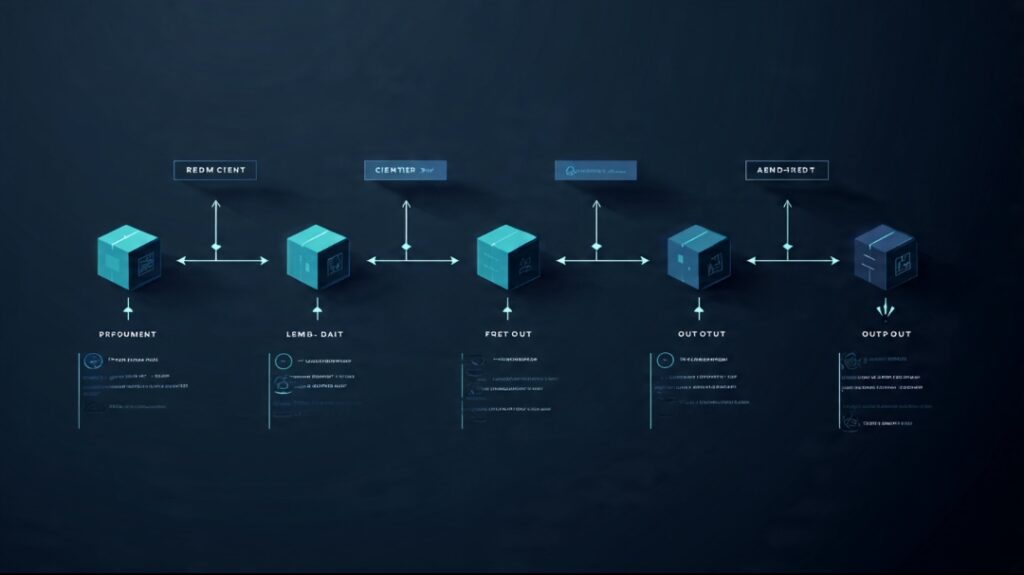
The clue is in the name: chain. LangChain excels at building workflows where steps happen in sequence — do this, then that, then the next thing. Take a user’s question, retrieve some relevant data, feed it to the model with a prompt, get an answer, format it, return it. Each step flows into the next in a mostly linear path. It provides ready-made components for common needs — connecting to data sources, managing prompts, calling tools, and stringing it all together — so you’re not building every piece from scratch. It’s the natural home for patterns like retrieval-augmented generation (RAG), where you fetch information and feed it to the model in a clean sequence.
Think of LangChain as a toolkit for assembling language-model applications out of standard parts, connected in a line. For a huge range of useful applications — chatbots, question-answering over documents, simple assistants — that linear, chain-based approach is exactly what you need, and nothing more complex is required.
“LangChain is about connecting steps in a line: do this, then that, then return the answer. For most everyday AI apps, a clean chain is all you need.”
What Is LangGraph?
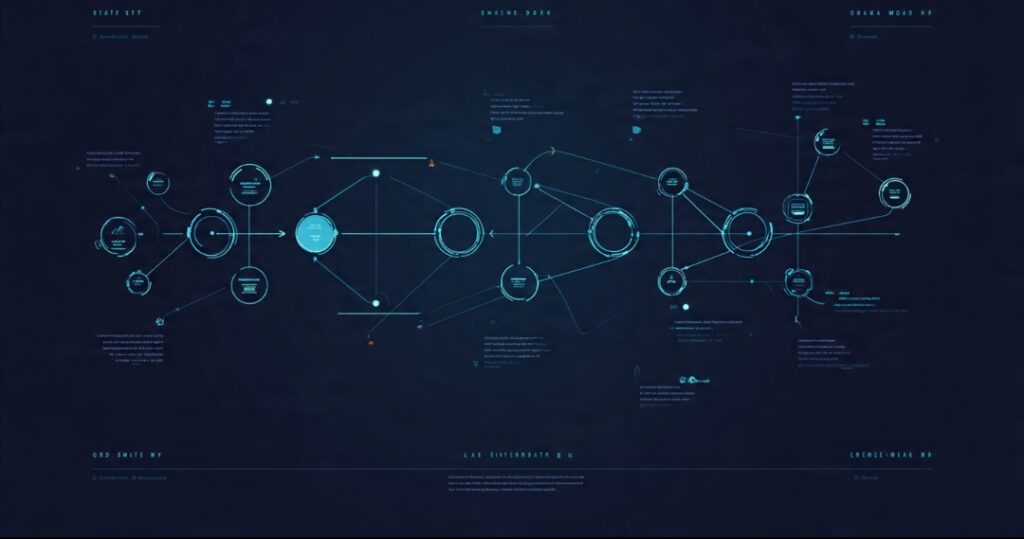
LangGraph is built by the same team, but for a harder problem. Where LangChain shines at linear sequences, LangGraph is designed for workflows that loop, branch, remember, and coordinate — the messy, non-linear flows that real AI agents need. The clue is again in the name: graph. Instead of a straight chain, LangGraph lets you build your application as a graph of connected nodes where the path can cycle back, split, and make decisions about where to go next.
Why does that matter? Because true AI agents rarely work in a straight line. An agent perceives, reasons, acts, checks the result, and often has to loop back and try again — a cycle, not a sequence. It needs to maintain state (a memory of what’s happened so far) across those loops, make branching decisions, and sometimes coordinate multiple agents working together. Modeling that as a simple chain gets painful fast. LangGraph is purpose-built for it: you can think of it as defining your workflow like a state machine, where the application moves between states, loops when needed, and keeps track of everything along the way.
This makes LangGraph the natural choice for building sophisticated, agentic systems — ones with cycles, persistent memory, human-in-the-loop checkpoints, and multiple coordinating agents. It gives you fine-grained control over complex flows that a linear chain simply can’t express cleanly.
“LangChain draws a line. LangGraph draws a map — with loops, branches, and memory. Real agents live on the map, not the line.”
LangChain vs LangGraph: The Core Difference
Strip it all down and the difference is about the shape of the workflow. LangChain is for sequences; LangGraph is for graphs with loops and state.
| LangChain | LangGraph |
|---|---|
| Best for linear, sequential workflows | Best for looping, branching workflows |
| A chain of steps | A graph of connected nodes |
| Simpler state handling | Built around persistent state and memory |
| Great for chatbots, RAG, simple assistants | Great for complex, multi-agent systems |
| The foundational toolkit | The advanced control layer on top |
The most important thing to understand: they are not rivals you choose between. LangGraph is designed to work with the same ecosystem and components as LangChain — it’s the more powerful layer you reach for when your workflow outgrows a simple chain. You’ll very likely use both, often in the same project, with LangChain components living inside a LangGraph structure.
So Which Should You Learn First?
Now the recommendation makes sense. Learn LangChain first, for three reasons.
1. It teaches the fundamentals. LangChain introduces the core building blocks — models, prompts, tools, data connections, and how to chain them — that everything else builds on. These are the basics of building any language-model application, and LangGraph assumes you already understand them.
2. Most starter projects don’t need graphs. The applications a beginner builds first — a chatbot, a document Q&A tool, a simple assistant — are linear workflows that LangChain handles perfectly. You can build genuinely useful things with LangChain alone, without ever needing LangGraph’s complexity.
3. LangGraph makes sense only after chains do. LangGraph solves the problems you hit after you’ve built simple chains and found their limits — when you need loops, state, and coordination. If you haven’t felt those limits yet, LangGraph’s power will feel abstract and confusing. Learn it when you have a real need for it, and it clicks instantly.
So the path is: get comfortable building linear applications with LangChain, and the moment you find yourself fighting to make a chain loop, remember complex state, or coordinate multiple agents — that’s your signal to graduate to LangGraph. You’ll learn it far faster because you’ll finally understand the problem it exists to solve.

What Nobody Tells You
Here’s the perspective that saves beginners the most wasted time. The biggest mistake isn’t picking the “wrong” framework — it’s rushing into frameworks before understanding the fundamentals underneath them. LangChain and LangGraph are tools for orchestrating language models and agents. If you don’t first understand what a language model actually is, how tokens and context work, why models sometimes hallucinate, and the basic concepts of generative AI, then any framework will feel like memorizing magic spells you don’t understand.
The second thing nobody emphasizes enough: frameworks change fast, but concepts are forever. The specific features, syntax, and even the popularity of any given tool will shift over time. What won’t change is the underlying idea — the difference between a linear chain of steps and a stateful graph of looping, coordinating agents. Master that concept, built on a solid understanding of models and foundation models, and you’ll be able to pick up any framework quickly, including whatever replaces these two someday. Learn the ideas deeply and the tools become easy; learn only the tools and you’ll be lost the moment they change.
Now It’s Your Move
LangChain versus LangGraph was never really a competition — it’s a sequence. LangChain gives you the foundational skill of chaining a language model to the world; LangGraph gives you the advanced power to build agents that loop, remember, and coordinate. Learn them in that order, grounded in real understanding of the fundamentals, and the whole landscape stops being confusing.
- Shore up the fundamentals first. Make sure you understand language models, tokens, context, and basic generative AI concepts before touching either framework.
- Start with LangChain. Learn to build simple, linear applications — a chatbot or a document Q&A tool — using its core components.
- Build something real and small. Nothing teaches faster than shipping a tiny working project with LangChain alone.
- Notice the limits. When you find yourself needing loops, persistent state, or multiple coordinating agents, that’s your signal.
- Graduate to LangGraph. Learn it when you have a real problem it solves — it’ll click far faster that way.
You don’t have to choose between them, and you don’t have to learn everything at once. Start with LangChain, understand the concepts beneath it, and let LangGraph come when you’re ready for it. That’s the fastest, least confusing path from beginner to building real AI agents.
LangChain is a framework for building language-model applications as chains of steps that mostly happen in sequence, ideal for linear workflows like chatbots and document question-answering. LangGraph, built by the same team, is designed for workflows that loop, branch, maintain state, and coordinate multiple agents, modeling the application as a graph of connected nodes rather than a straight line. In short, LangChain is for sequences and LangGraph is for stateful, cyclical agent workflows.
Learn LangChain first. It teaches the foundational building blocks of working with language models, such as prompts, tools, data connections, and chaining, that LangGraph assumes you already understand. Most beginner projects are linear workflows that LangChain handles perfectly, so you can build useful applications with it alone. LangGraph solves problems you encounter only after building simple chains and hitting their limits, so it makes far more sense once you have that foundation.
No, they are not rivals you choose between. LangGraph is built to work with the same ecosystem and components as LangChain and serves as a more powerful layer for complex, stateful workflows. You will very likely use both, often in the same project, with LangChain components living inside a LangGraph structure. Think of them as complementary layers rather than competing options, with LangGraph reaching in where a simple chain is not enough.
Use LangGraph when your workflow needs to loop, branch, maintain persistent state or memory across steps, include human-in-the-loop checkpoints, or coordinate multiple agents working together. These non-linear, stateful patterns are awkward to express as a simple chain but are exactly what LangGraph is built for. If your application is a straightforward sequence of steps, LangChain is enough, but the moment it becomes cyclical and stateful, LangGraph is the better tool.
Yes, and that is often the intended approach. Because LangGraph shares the same ecosystem as LangChain, you can use LangChain’s components for individual steps while using LangGraph to structure the overall stateful, looping workflow around them. This lets you combine LangChain’s convenient building blocks with LangGraph’s control over complex agent flows, which is why many real projects rely on both rather than picking just one.
Yes, both are developer frameworks used to build applications, so a working knowledge of programming is needed to use them directly. However, understanding the concepts behind them, such as the difference between a linear chain and a stateful graph of agents, does not require coding and is valuable on its own. Before diving into either framework, it helps to be comfortable with fundamentals like what language models are and how tokens and context work.
Specific frameworks, their features, and their popularity do change over time, which is why it is a mistake to learn only the tool and not the ideas beneath it. The underlying concepts, such as the difference between linear sequential workflows and stateful cyclical agent workflows, remain valuable regardless of which tool is popular. If you master those concepts along with a solid understanding of language models, you will be able to pick up any framework quickly, including whatever eventually replaces these.
Disclaimer: This article is for educational and informational purposes only and explains concepts in general terms for beginners. It is not technical or implementation advice, and it is not affiliated with or endorsed by the makers of any framework mentioned. Artificial intelligence tools evolve rapidly, so always verify current features and best practices against official, up-to-date documentation before building.