Let me tell you something that took me years to figure out — and that I wish someone had sat me down and explained directly when I was starting out.
A few years ago I had a decent amount of saved capital sitting in my account. My first instinct was to jump into a “hot” opportunity everyone around me was talking about. I almost did it. Then one number stopped me cold: 90% of new businesses fail within their first few years.
I was not special. I had no reason to believe I would land in the 10% without doing the work first.
So instead of throwing money at something I did not deeply understand, I calculated my monthly survival expenses — rent, food, utilities, the basics. I set aside six full months of that. Non-negotiable. That money was not going anywhere.
Then I did something that felt counterintuitive but turned out to be the best decision I made: I went and worked in the exact industry I wanted to enter. Not as an owner. Not as an investor. As a learner.
For two years I absorbed everything. How products moved. Where the real margins were. Which suppliers were reliable. What customers actually wanted versus what they said they wanted.
When I finally invested only 10% of my remaining capital into my own venture, I was not guessing. I knew. That calculated bet grew into something real.
The most important lesson was not about tactics. It was about how successful businessmen actually think every single day. They do not gamble. They calculate. They learn before they invest. They protect the downside before chasing the upside. They think in years, not weeks.

The Foundation: Why Mindset Beats Strategy Every Time
Most people obsess over finding the right opportunity. The perfect product. The ideal market. The best timing. They spend months researching strategies while their mental operating system is full of fear, impatience, and short-term thinking.
Here is what I have personally watched happen repeatedly: people with mediocre business ideas built incredible companies. People with genuinely brilliant concepts crashed within months. The difference was never the strategy, the funding, or the connections. It was how they thought about problems, opportunities, and setbacks every single day.
Your mindset is the operating system. Your strategies, tactics, and marketing are just applications running on top of it. If the operating system is broken — filled with ego, fear, or the desperate need for instant results — even the best strategies will fail in execution.
According to Harvard Business Review’s research on entrepreneurial decision-making, successful entrepreneurs share specific cognitive patterns that influence their choices fundamentally. The important part: these patterns are not genetic. They are developed through deliberate practice and consistent daily habits. That means they are available to anyone willing to do the work.
Fixed Mindset vs. Growth Mindset — The Difference That Actually Matters
Stanford psychologist Carol Dweck’s research on growth mindset is not just motivational content. It describes a fundamentally different way of processing reality.
Successful businessmen operate from a growth mindset by default. Here is what that looks like in practice — not theory:
- They treat failures as data, not verdicts. When a product flops or a deal falls through, they analyze what specifically went wrong and extract the lesson. They do not spiral into self-doubt or quit.
- They believe skills are built, not born. They do not say “I am not good at sales.” They say “I have not developed that skill yet” — and then they work on it.
- Criticism is free consulting to them. Harsh feedback gets filtered for the useful signal. Ego does not enter the conversation.
- Other people’s success does not threaten them. When a competitor wins, they study what worked. Jealousy is replaced with curiosity.
When my first serious trading strategy blew up and cost me real money — a fixed mindset would have concluded: I am not cut out for this. Time to give up.
Growth mindset asked a different question: what specifically went wrong, and how do I fix it so it never happens again?
That single question has been worth more to me than any amount of starting capital.

I used to roll out of bed and immediately grab my phone. Check messages. Scroll news. React to whatever the world threw at me. My days felt scattered and out of control — because they started scattered and out of control.
Then I studied what high achievers actually do in the morning. The pattern is consistent and the reasoning is simple:
Mornings are for creation and intention. Not consumption and reaction.
Here is the honest comparison:
The Reactive Morning — how most people operate: Wake up. Immediately check phone. Scroll notifications, news, social media. React to emails from other people. Rush through getting ready. Feel behind and stressed before 9 AM. Spend the rest of the day catching up.
The Proactive Morning — how high achievers operate: Wake up before the world demands attention. Protect the first 60 to 90 minutes for personal development. Physical movement. Strategic thinking, not reactive thinking. Set clear intentions and priorities. Then — and only then — engage with the outside world. Start from clarity and control.

Every single morning, before touching any device, spend 15 to 20 minutes just thinking. No phone. No laptop. No television. A notebook, a pen, and your brain doing what it does best when given actual space. Ask yourself:
- What is the ONE thing that would make today genuinely successful?
- What problems am I avoiding that I need to face?
- Where am I making things more complicated than they need to be?
- What would I do today if I absolutely could not fail?
This is not meditation for the sake of it. This is dedicated strategic thinking time — something most people never consciously schedule and then wonder why they feel reactive and scattered all day.
The Decision-Making Framework of High Achievers
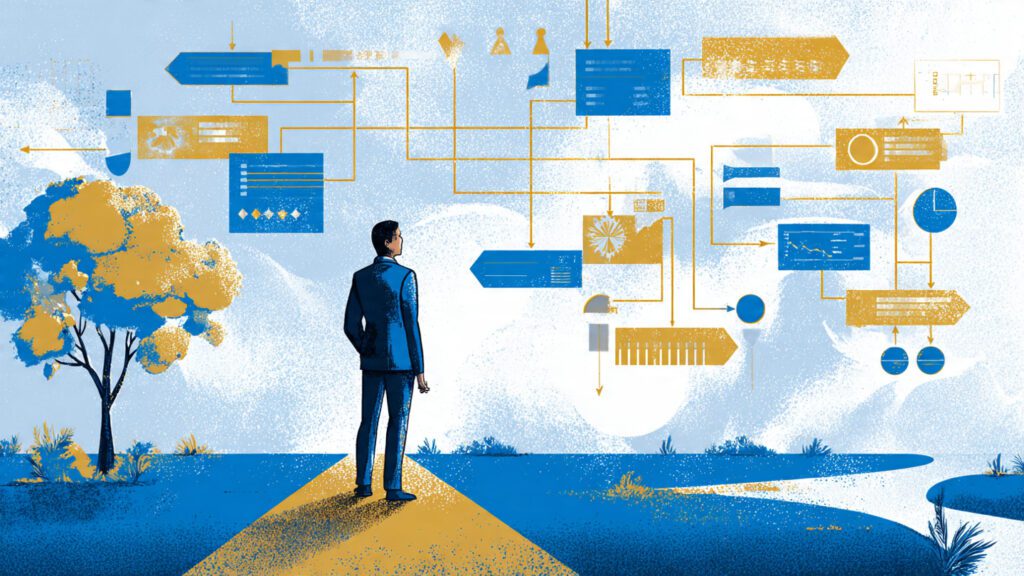
Every day, businessmen face dozens of decisions. What separates consistently successful ones is not making perfect decisions — nobody does that. It is having reliable frameworks for thinking through decisions quickly and accurately, even under pressure, even with incomplete information.
The 10-10-10 Rule
Whenever you face a tough decision, ask three questions: How will I feel about this in 10 minutes? In 10 months? In 10 years?
This prevents short-term emotional thinking from hijacking long-term strategic decisions. The flashy expense that feels exciting right now probably will not matter — or might hurt — in 10 months. The discomfort of a difficult conversation you are avoiding? In 10 years you will wish you had it immediately instead of letting resentment build for a decade.
Most regrets come from optimizing for 10-minute feelings at the expense of 10-year outcomes.
Reversible vs. Irreversible Decisions
Not all decisions deserve the same level of analysis. Treating every decision like it is irreversible produces paralysis, missed opportunities, and competitive disadvantage.
Irreversible decisions — selling your business, taking on significant debt, entering binding long-term contracts — deserve deep analysis, multiple perspectives, and careful thought. Take your time.
Reversible decisions — testing a marketing channel, trying new pricing, launching a minimum viable product — should be made quickly. Move fast, learn from results, adjust. The cost of being wrong is manageable. The cost of not moving is compounding.
The problem is that most people treat every decision like it is irreversible. They overthink, delay, analyze endlessly, and miss opportunities while waiting for perfect information that will never come. Identify which type you are facing. Act accordingly.
The Hell Yes or No Filter
If an opportunity is not a clear, enthusiastic yes — an obvious, exciting decision that genuinely energizes you — it should be a no. Saying yes to mediocre opportunities means saying no to excellent ones you have not discovered yet. Every yes to something average is a no to something potentially exceptional. Apply this ruthlessly to partnerships, projects, clients, and investments.
Risk Management: Thinking in Probabilities
Trading taught me something that completely restructured how I approach every business decision: certainty is an illusion.
You can do everything right — perfect analysis, perfect timing, perfect execution — and still lose on any individual trade. The outcomes are probabilistic, not deterministic. The best you can do is stack probabilities in your favor and manage risk so that inevitable losses do not destroy you.
Successful businessmen think the exact same way about their ventures.
The What If I Am Completely Wrong Question
Before any significant decision, force yourself to ask one uncomfortable question: what happens if I am completely, devastatingly wrong about this?
If the answer is catastrophic — total loss, no recovery, game over — do not make that bet. No opportunity is worth risking total ruin. This is precisely why I set aside six months of living expenses before starting my business. Even if everything failed completely, I would not be desperate. I would have runway to recover and try again.
Never bet everything on any single opportunity. No matter how good it looks.
Position Sizing for Business
In professional trading, the rule is never risk more than a small percentage of total capital on any single trade. Two bad trades at 50% risk each equals zero. Twenty bad trades at 2% risk each still leaves you with meaningful capital to work with.
The same principle applies directly to business:
- Do not put all capital into one inventory bet — if it does not sell you need capital to try something else
- Do not rely on a single customer for the majority of your revenue — if they leave, your business should survive
- Do not build your entire business on a platform you do not control — algorithms change, accounts get banned, rules shift overnight
- Do not have a single point of failure anywhere critical
When I started, I invested only 10% of available capital first. Not 50%. Not 100%. Ten percent. If everything failed, I would have lost a painful but survivable amount. I would still have 90% to try again, smarter and better informed from the experience.
Compound Thinking: The Wealth Pattern Nobody Talks About Honestly
If there is one mental model that genuinely separates wealthy successful people from everyone else, it is understanding compound growth — not intellectually but in every decision, automatically.
The math is simple: improving by just 1% every day means being 37 times better after one year. Not 365% better. 3,700% better.
This applies beyond money. Reading 30 minutes daily adds up to dozens of books per year. Over a decade you have consumed more knowledge than most people do in a lifetime. Small, consistent acts of integrity build partnerships that open doors years later. Daily health habits determine your energy and capability for decades.
The challenge: compound growth is invisible in the short term. Day to day it feels slow, sometimes pointless. The magic only becomes apparent over years. This is exactly why most people never benefit from it — they expect visible results quickly, get discouraged, and quit before the compounding begins.
Remember the two years I spent learning before investing significantly? It felt slow. Friends were jumping into businesses immediately. The pressure to “just start already” was intense. But those two years gave me supplier relationships built on trust, deep knowledge of real margins, understanding of what actually sells versus what just looks good, and a network of warm contacts. When I launched, I was not guessing. The two years were not a delay — they were the foundation that made everything else possible. The “slow” approach was actually the fastest path to sustainable success.
Emotional Discipline: The Master Skill That Controls All Others
You can have perfect strategies, unlimited capital, and incredible opportunities — and still fail because emotions hijack your decisions at critical moments. I have witnessed this in trading more times than I can count. I have experienced it myself in expensive ways.
Every truly bad financial decision I have ever made came from one of two emotions: fear or greed.
Fear manifests as: Selling too early because of temporary drops. Not starting because of “what if” scenarios. Avoiding necessary risks. Paralysis by analysis — researching forever instead of acting. Accepting bad deals because you are afraid of losing the opportunity.
Greed manifests as: Holding too long and watching gains evaporate. Over-leveraging because “this one is guaranteed.” Expanding too fast. Taking unnecessary risks because things have been going well. Ignoring warning signs because you want to believe the opportunity is real.
Successful businessmen recognize these emotions arising and pause before acting on them. They do not pretend they do not feel fear or greed — that is impossible and unhealthy. They create space between feeling and action.
The 24-Hour Rule
For any significant decision that feels emotionally charged — whether excitement, fear, panic, anger, or euphoria — wait 24 hours before taking action. If the opportunity disappears in 24 hours, it probably was not a legitimate opportunity anyway. Real deals can wait a day for your decision. Anyone pressuring you to decide immediately is exploiting your emotional state, not presenting you with genuine value.
The Continuous Learning Obsession
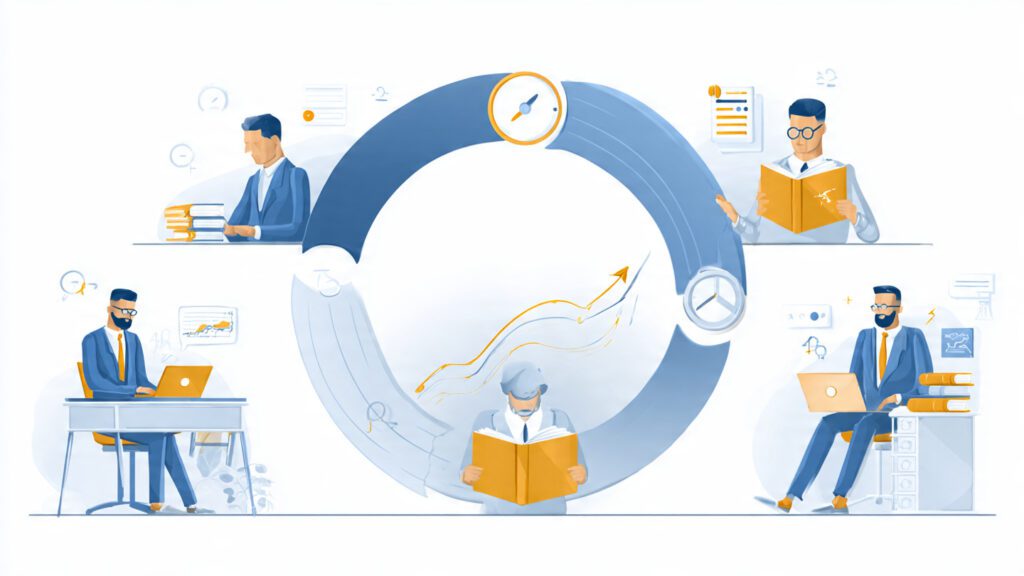
Every successful businessman I have ever studied has one trait without exception: they never stop learning. Not casual occasional learning. Deliberate, systematic, continuous learning as a non-negotiable part of their routine.
The pattern is consistent: commit to at least five hours per week of deliberate learning. Full books, not just summaries. Courses. Reflection — consciously extracting lessons from experience. Experimentation with documented results. Conversations with people who are ahead of you on paths you want to travel.
Five hours per week is less than 3% of your waking time. The compounding returns on this investment are extraordinary — and almost nobody does it consistently, which means you have an enormous competitive advantage available to you right now simply by showing up.
Here is something that genuinely surprised me when I started paying attention: in most industries, the bar for knowledge is remarkably low. Most competitors are not reading industry books. They are not studying market research. They are not analyzing case studies. If you commit to systematic learning, you will outlearn 90% of your competition within a few years. That knowledge translates directly into better decisions. Continuous learning is not just personal development — it is competitive strategy.
Money Psychology: What Rich and Poor Thinking Actually Look Like

How you think about money shapes your financial outcomes. Most people have never consciously examined their money beliefs — they were absorbed unconsciously in childhood and operate automatically in every financial decision.
The core distinction: every money decision is either spending or investing.
Spending: money goes out, nothing of lasting value returns. Pure consumption.
Investing: money goes out, something valuable comes back — financial returns, enhanced skills, stronger relationships, better health, expanded opportunities.
That course is not an expense — it is an investment in capabilities that generate returns for years. That gym membership is not spending — it is an investment in the energy and health that powers everything else. Being conscious about which category each purchase falls into changes financial trajectory over time in ways that are invisible month to month but massive over years.
And about the emergency fund: when you know you will not be desperate if things go wrong, you make dramatically better decisions. You can walk away from bad deals. You negotiate from strength. You wait for the right opportunity instead of jumping at the first available one. You think long-term because you are not panicking about next month’s bills. Financial security enables strategic risk-taking. Having a safety net allows you to take bigger, smarter, better-calculated risks than people who bet everything on single outcomes.
What Nobody Tells You About How Successful Businessmen Actually Think
Every mindset article gives you the inspiring version. Here is the part that does not make it into the motivational content.
The habits are boring and that is precisely why they work. The morning routine, the journaling, the 24-hour rule, the decision frameworks — none of these are exciting. They do not feel like breakthroughs when you are doing them. They feel like maintenance. The compounding effect only becomes visible after years, which means you will not get the satisfaction of seeing them work while you are building them. Most people quit before they compound. The ones who do not are the ones who succeed.
Identity change is required, not just behavior change. Most people try to force themselves into new behaviors directly. “I should wake up earlier.” “I should read more.” This approach fails consistently. Successful businessmen change their identity first: “I am the kind of person who protects mornings for strategic thinking.” “I am a lifelong learner.” When the identity shifts, behaviors follow naturally. When you are just forcing behaviors without identity change, every day is a battle against yourself.
The “learn before you invest” principle is one of the most consistently ignored pieces of good advice in existence. Everybody knows it is right. Almost nobody does it because patience feels like falling behind while everyone else is moving. The people who spent two years learning before investing almost always outperform the people who launched immediately. The “slow” path is usually the fastest path. The direct path usually produces the most expensive education.
Your five closest relationships will shape your thinking more than any book you ever read. This is not a metaphor. The people you spend time with normalize certain standards, certain levels of ambition, certain beliefs about what is possible. Auditing your environment is not a luxury — it is a foundation of mindset development. You can read every growth mindset book ever written and still have your thinking shaped primarily by the people who are around you daily.
7 Thinking Patterns That Kill Business Success
The Overnight Success Fantasy: Believing success should come quickly leads to frustration and constant jumping between opportunities. Most overnight successes were ten years in the making. Expect that timeline and build accordingly.
Comparison Paralysis: Constantly comparing yourself to other people’s highlight reels creates anxiety and scattered focus. Everyone’s path is different. Someone else’s success does not prevent yours.
Perfect Conditions Waiting: Telling yourself you will start when you have more money, more time, more certainty. Conditions are never perfect. Start with what you have. Improve as you go.
Failure as Identity: Interpreting failures as evidence of who you are rather than feedback about what you did. Failure is information, not identity.
Either/Or Thinking: Seeing situations as complete success or total failure, all-in or not at all. Most situations have middle paths. Small steps and iterative progress are almost always available.
The Victimhood Trap: Blaming external circumstances for problems while ignoring your own role. External factors matter. But focusing on what you can control is far more productive than focusing on what you cannot.
Action Without Reflection: Constantly doing without ever stopping to think about whether the activity is moving toward actual goals. Busy is not the same as productive. Regular reflection ensures effort is directed effectively.
Frequently Asked Questions
Q: What is the single most important mindset trait for business success?
Delayed gratification combined with emotional discipline. The ability to sacrifice short-term comfort for long-term rewards — and to make rational decisions even when emotions are running high — separates those who build lasting wealth from those who chase quick wins and repeatedly lose their gains. You can learn every strategy and tactic. Without the discipline to execute consistently when it is uncomfortable, knowledge is entertainment, not an edge.
Q: How much should I keep in emergency savings before starting a business?
A minimum of three to six months of actual survival expenses — not comfortable living, survival. Rent, food, utilities, minimum obligations. Calculate honestly. This buffer prevents desperation-driven decisions, allows you to negotiate from strength, and enables you to think long-term because you are not panicking about next month. It is not optional. It is the psychological foundation of good decision-making.
Q: How do I stop making emotional decisions?
Start by developing awareness of when emotions are driving your thinking. Racing thoughts, physical tension, urgency, rationalization, and dismissing contradictory information are all warning signs. Implement the 24-hour rule for any significant decision that feels charged. Keep a decision journal — record major decisions, your emotional state when making them, and outcomes. Patterns emerge that reveal your specific triggers. Build emotional regulation capacity through exercise and adequate sleep. These are not soft suggestions. They are professional requirements for anyone making financial decisions.
Q: Is waking up at 4 AM actually necessary?
No. The specific hour is irrelevant. What matters is protected time before the world’s demands start controlling your attention. For some people that is 4 AM. For others 6 or 7 AM works perfectly. Focus on the principle — protected proactive morning time — not the specific number on the clock.
Q: Can someone from a poor or middle-class background develop a wealthy mindset?
Yes — but it requires deliberately examining the unconscious beliefs absorbed in childhood. What did your family believe about money? About wealthy people? About what is possible for people like you? Many limiting beliefs have never been consciously questioned. They operate in the background driving every financial decision. Start examining them. Deliberately expose yourself to different thinking patterns through books, mentors, and communities. Background shapes your starting point. It does not determine your destination.
Q: What is the most practical first step someone can take today?
Tomorrow morning: do not touch your phone for the first 30 minutes after waking. Put it in another room if necessary. Spend those 30 minutes asking yourself: what is the one thing that would make today genuinely successful? That single habit, maintained consistently, will change how you start every day — and how you start every day changes everything that follows.
They protect their mornings. Not to be productive — to be proactive before the world makes them reactive.
They use decision frameworks. Not because they lack confidence — because they know emotions will try to override logic at critical moments.
They risk proportionally. Never betting the farm. Always preserving the ability to try again.
They compound deliberately. In money, skills, relationships, and reputation — over years, not weeks.
They learn continuously. Not casually. Systematically. As a non-negotiable competitive strategy.
They are emotionally disciplined. Not because they feel no fear or greed — because they pause before acting on either.
And they do all of this consistently, boringly, day after day, long after motivation has faded. That consistency is the entire secret.
Final Thought
The way successful businessmen think is not magic. It is not a personality type you either have or do not have. It is a set of mental habits, practiced daily, that compound over time into outcomes that look extraordinary from the outside but are the completely predictable result of consistent right action from the inside.
Start with one thing from this article. Not ten. One. Build it into a habit before you add another. That is exactly how it works. That is the only way it works.
Disclaimer: This article is for educational purposes only and reflects personal business experience and philosophy. Business results depend on individual execution, market conditions, and many factors outside any framework’s control.