You know the trade. You watched a setup you were not sure about, decided to wait, and then price took off without you. Now it is running, hard, in the direction you thought about taking, and every green candle feels like money being pulled out of your pocket. You cannot stand it. You jump in, late, at a price you would have laughed at ten minutes ago. And almost the instant you are filled, the move stalls and reverses, leaving you underwater on a position you never should have taken.
That is FOMO, the fear of missing out, and in trading it is not a minor character flaw. It is one of the most reliable account-destroyers there is. It does not blow you up with a single dramatic loss. It bleeds you through a hundred impulsive entries, each one taken not because your plan said so, but because you could not bear to watch from the sidelines. Learning to sit still while a move happens without you is one of the hardest and most valuable skills a trader ever builds, and it is a core reason most traders fail the first time.
What FOMO Actually Is at the Screen
FOMO is the anxiety that others are profiting from something you are not part of, and the urge to jump in so you are not left behind. Outside of trading it is mostly harmless. Inside a live market, with real-time prices and real money on the line, it becomes something far more dangerous, because the “thing you are missing” is quantified, visible, and moving second by second. The concept is well documented as a genuine psychological driver, described plainly in this overview of the fear of missing out.
Here is the part that makes it so potent: your brain treats a missed gain almost like an actual loss. Watching a move you could have caught triggers something close to the pain of losing money you never had. That is why sitting out a strong move feels physically uncomfortable, and why the “solution” of chasing it feels so urgently right in the moment, even though it is usually the worst thing you can do. This is behavioural finance in its rawest form, the study of how emotion overrides logic in financial decisions, covered broadly under behavioral finance.
Why Markets Supercharge FOMO
A few features of trading specifically pour fuel on this fire, and it helps to name them.
The money is visible and live. You are not imagining a missed opportunity, you are watching it tick higher in real time. Every pip is a running tally of what you “should” have made.
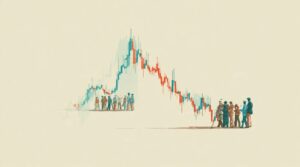
Everyone else seems to be winning. Social media and trading chats are full of people posting their wins and quietly hiding their losses. It creates a distorted picture where it feels like the whole world caught the move except you. This is a digital version of herd behavior, the instinct to follow the crowd, and the crowd always looks like it is winning.
Leverage magnifies the regret. When positions are leveraged, the imagined “missed profit” is amplified too, so the pain of sitting out is bigger, and the temptation to chase with an oversized position to “make up for it” is stronger.
There is no closing bell in your head. Markets, especially forex and crypto, run around the clock. There is always another move happening somewhere, which means the FOMO never really gets a chance to switch off unless you switch it off deliberately.
The Anatomy of a FOMO Trade
FOMO trades follow a depressingly predictable script. Once you can see the pattern, you can catch yourself inside it.
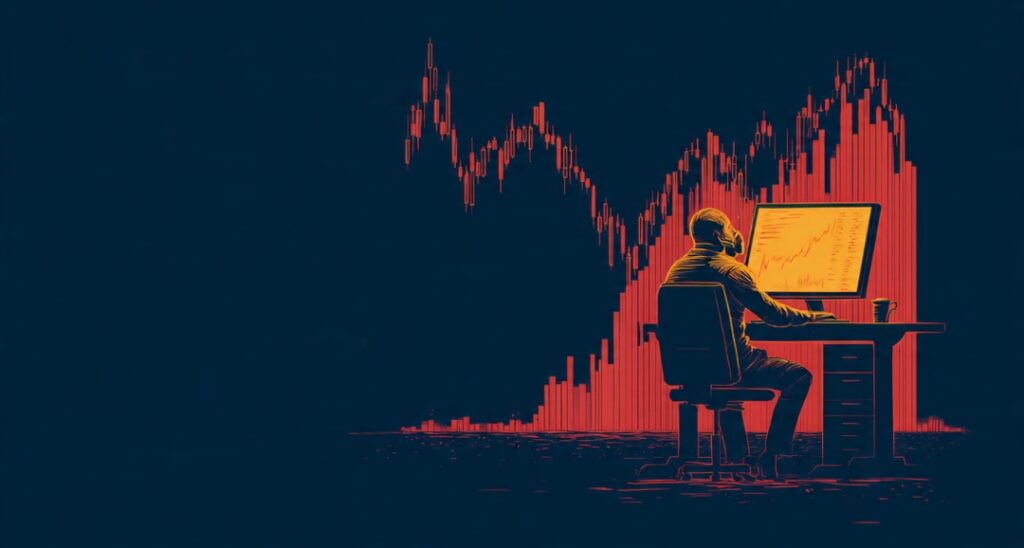
It starts with a missed move, a setup you passed on, or one you never spotted until it was already running. Then comes the itch, that rising discomfort as the price extends and the “profit you are missing” grows in your mind. The itch becomes a justification, your brain rapidly inventing reasons why it is still a good entry (“it is clearly strong, it will keep going”). Then the chase, you enter late, deep into an extended move, at a terrible price relative to any sane setup. Because it was impulsive, there is usually no real plan, no predefined stop, no target, no idea where you are wrong. And then, with grim regularity, the reversal, because you bought exactly when the move was running out of steam, often right into the liquidity that smart money was selling into.
What happens next is what actually kills the account. The losing chase triggers revenge, the urge to immediately win it back, which produces another impulsive trade, and another. This is the doorway to revenge trading, and the two emotions feed each other in a loop until the session, or the account, is wrecked. FOMO and revenge are two heads of the same beast, both are just fear and greed wearing different masks.
Why Chasing Is Mathematically Bad, Not Just Emotionally
Even if you could chase with perfect emotional calm, the act itself is stacked against you, and this is the part traders underestimate. When you enter late into an extended move, you are buying at a worse price by definition, which means your stop has to be further away and your reward-to-risk ratio collapses. The clean setup offered a tight stop and a big target. The chase offers a wide stop and whatever is left of the move.
Worse, extended moves are precisely where reversals cluster. By the time a move is obvious enough to trigger your FOMO, much of it is already done, and you are often entering right as the earlier participants are taking profit, in other words, you are providing the liquidity they exit into. You are buying the top or selling the bottom, structurally. A disciplined entry waits for price to come back to a level on your terms; the chase does the exact opposite, paying the worst price for the least remaining opportunity. This is also why so many people fall into chronic overtrading, taking far more positions than any edge justifies.
How One Emotion Empties a Whole Account
It is worth being clear that a single FOMO trade rarely destroys anyone. What destroys accounts is the cascade it sets off. A missed move leads to a chase. The chase, taken emotionally, is often oversized, “this one is a sure thing, I will size up to recover.” The oversized loss stings badly, which triggers revenge. Revenge trades are even more impulsive, and the emotional state, often called being on tilt, gets worse with each one. Risk management goes out the window exactly when it is needed most.
Within a single afternoon, a trader who started calm can hand back weeks of gains, not because their strategy failed, but because one moment of FOMO opened the door to an emotional spiral. This is the quiet truth behind why even profitable traders blow their accounts: it is almost never the system, it is the sequence of emotional decisions that starts with the inability to sit out one move. And it closely mirrors the damage done by overconfidence after a winning streak, another emotional state that dissolves discipline.
How to Actually Beat FOMO
You do not defeat FOMO by trying harder to resist it in the moment, willpower loses to emotion every time. You defeat it by building a structure that makes the impulsive trade impossible, or at least much harder. Here is what actually works.
1. Internalise that there is always another trade
This is the mindset root of the whole thing. Markets are not a train leaving the station for the last time; they generate opportunities endlessly, every day, forever. A missed move is not a loss, it is a Tuesday. When you truly believe another setup is always coming, the desperation drains out of the decision. Scarcity thinking is what makes FOMO unbearable; abundance thinking dissolves it.
2. Only take your defined setup
Have a written, specific set of criteria for what counts as your trade. If a move does not meet those criteria, then by definition it is not your trade, no matter how tempting it looks. This single rule reframes a missed move entirely: you did not miss your trade, you correctly declined someone else’s. Trading a mechanical, criteria-based setup is exactly what removes the guesswork, which is the whole logic behind approaches like the ICT Silver Bullet’s fixed window, where you literally wait for the time and the pattern rather than chasing whatever moves.
3. Predefine entry, stop and target, before you click
The chase thrives on having no plan. Kill it by refusing to enter any position without a predefined entry level, stop and target decided in advance. If price has already run past your planned entry, the trade is gone, and you let it go. No plan, no trade. This removes the improvisation that FOMO depends on.
4. Wait for the retracement
Strong moves very often pull back. Instead of chasing the extension, train yourself to wait for price to return to a level where the setup actually makes sense, on your terms, with a tight stop. Sometimes it comes back and you get a clean entry. Sometimes it does not, and you missed it, which is fine, because there is always another trade. Patience here is not passivity; it is one of the defining skills of disciplined trading.
5. Turn down the noise
FOMO feeds on stimulation, live charts you do not need to watch, chat rooms full of other people’s wins, constant alerts. Reduce your screen time to the windows you actually trade. Mute the noise that makes you feel like everyone is winning without you. You cannot chase a move you are not staring at.
6. Fix your risk so no single trade matters
When each trade risks only a small, fixed percentage of your account, the stakes of any one move, taken or missed, shrink dramatically. A missed move barely registers when catching it would not have changed your month anyway. Sound risk management is not just about surviving losses; it quietly defuses the emotional weight that powers FOMO in the first place. The same discipline is the backbone of any real risk-management practice.
7. Journal every FOMO trade
Write down each impulsive entry, what you felt, what triggered it, and how it turned out. Over a few weeks the pattern becomes undeniable, and seeing your own FOMO trades lose money on paper, again and again, does more to cure the habit than any amount of good intentions. You cannot fix what you refuse to look at.
The Reframe That Fixes Everything
Here is the single shift that, once it truly lands, quietly ends most FOMO for good. Missing a trade costs you nothing. Taking a bad trade costs you real money.
Sit with that, because it inverts the entire emotional logic of FOMO. The fear tells you that sitting out is the expensive mistake and that jumping in is the safe response. The reality is the exact opposite. The sideline is free. The chase is where the damage happens. Every move you let pass without a valid setup is a small act of professionalism, and every impulsive entry you avoid is money you kept. The best traders are not the ones who catch every move; they are the ones who are completely at peace missing the ones that were never theirs to take. That is the difference between treating this as a disciplined business and treating it as a slot machine, which is really the whole game, as laid out in why trading is a business, not a lottery.
🔑 Key Takeaways
- FOMO is your brain treating a missed gain like a loss, which makes sitting out feel painful and chasing feel urgent, even though chasing is usually the worst move.
- Markets supercharge it: live visible profit, everyone posting wins, leverage amplifying regret, and no closing bell to switch it off.
- Chasing is mathematically bad, not just emotional, late entries mean worse prices, wider stops, collapsed reward-to-risk, and buying right as reversals cluster.
- The cascade kills the account: chase leads to oversized loss leads to revenge leads to tilt, one FOMO moment can undo weeks of gains.
- Beat it with structure, not willpower: trade only a defined setup, predefine entry/stop/target, wait for the retracement, cut the noise, and fix your risk small.
- The reframe: missing a trade costs nothing, taking a bad one costs real money. There is always another trade.
Frequently Asked Questions
What is FOMO in trading?
FOMO, or fear of missing out, is the anxiety a trader feels when a price is moving without them, and the resulting urge to jump into the trade late so they do not miss the profit. It typically leads to impulsive, unplanned entries at poor prices, which is why it is so damaging to trading accounts.
Why is chasing an entry so bad?
Chasing means entering late into an already-extended move. That forces a worse entry price, a wider stop and a poorer reward-to-risk ratio, and it often puts you in right as the move runs out of steam and reverses. You end up buying near the top or selling near the bottom, structurally disadvantaged before the trade even begins.
How does FOMO actually destroy an account?
Rarely through one trade. A FOMO chase usually leads to a loss, which triggers revenge trading and often oversized positions to “win it back.” That emotional spiral, sometimes called tilt, produces more impulsive trades with abandoned risk management, and a calm trader can give back weeks of gains in a single session.
How do I stop taking FOMO trades?
Build structure rather than relying on willpower. Trade only a written, defined setup, predefine your entry, stop and target before clicking, wait for price to retrace to a valid level, reduce screen time and chat-room noise, and keep your risk per trade small and fixed. Journaling your FOMO trades also exposes the pattern quickly.
Is it normal to feel FOMO even as an experienced trader?
Yes. FOMO is a deep-seated psychological response, and even experienced traders feel the pull. The difference is that they have systems and mindset habits that stop the feeling from turning into an impulsive trade. The goal is not to never feel it, but to never act on it.
What is the best mindset shift to beat FOMO?
Internalising that there is always another trade. Markets produce opportunities endlessly, so a missed move is not a loss, it is routine. Paired with the reminder that missing a trade costs nothing while taking a bad trade costs real money, this reframe removes most of the desperation that drives FOMO.
Does reducing screen time really help with FOMO?
Significantly. FOMO is fed by watching live moves you are not part of and seeing others’ wins in real time. By limiting your screen time to the windows you actually trade and muting unnecessary alerts and chat rooms, you remove much of the stimulation that creates the urge to chase in the first place.
⚠️ Disclaimer: This article is for educational and informational purposes only and does not constitute financial, investment or trading advice, nor a recommendation to buy or sell any instrument. Trading forex, gold, cryptocurrencies and other leveraged products carries a high level of risk and can result in the loss of some or all of your capital; it is not suitable for everyone. Past performance and illustrative examples do not guarantee future results. Always use proper risk management, trade only with capital you can afford to lose, and consider consulting a qualified, licensed professional before trading.